
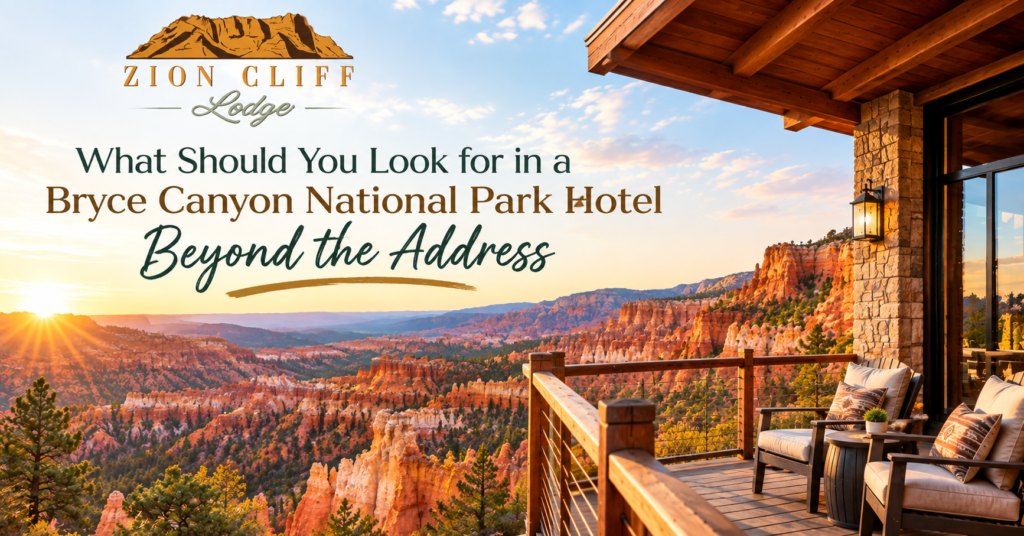
Bryce Canyon National Park Hotel

Bryce Canyon National Park Hotel

“Where you stay can determine how much of the destination you actually experience.”

That becomes especially true around Bryce Canyon National Park, where a trip is not simply about reaching an overlook, taking a photograph, and returning to a hotel. The timing of sunrise, seasonal shuttle operations, changing temperatures, dark-sky conditions, trail access, and the rest of a Southern Utah road trip can all influence where it makes sense to spend the night. Bryce Canyon also rewards travelers who leave room in their itinerary for experiences after the main viewpoints have quieted down. The park is an International Dark Sky Park, and its high elevation and remote setting create unusually dark skies for stargazing.

That means choosing a Bryce Canyon National Park hotel is less about finding the closest bed and more about finding lodging that fits the way you actually want to travel.

Table of Contents

  • Why the closest hotel is not always the most useful choice
  • What Bryce Canyon travelers should consider before booking
  • How the shuttle changes the way you plan your visit
  • Why nighttime deserves a place in your itinerary
  • Should you stay in one place or build a multi-park road trip?
  • What makes boutique lodging different from a conventional hotel
  • How Zion Cliff Lodge fits into a Southern Utah itinerary
  • Questions travelers ask before booking Bryce Canyon lodging
  • Conclusion and next steps

Why the Closest Hotel is Not Always the Most Useful Choice

Distance looks simple on a booking screen. A property is either close to Bryce Canyon or it is not. In practice, the better question is whether the location works with your entire itinerary.

Bryce Canyon is often one stop within a larger Southern Utah journey. Travelers may combine it with Zion National Park, Grand Canyon North Rim, Coral Pink Sand Dunes, scenic Highway 12, Kanab, or other red-rock destinations. Spending every night as close as possible to one park can therefore create unnecessary backtracking later.

There is also a difference between being close to a park entrance and being positioned well for the experiences surrounding that park.

A traveler who wants an early morning at Bryce Canyon may prioritize driving convenience. Someone completing a multi-day road trip may care more about having a comfortable base that connects several destinations. A couple planning a slower scenic getaway may value privacy, views, and a quieter atmosphere just as much as mileage.

The right lodging decision begins with your route, not the hotel search box.

What Should You Check Before Booking a Bryce Canyon Stay?

The most useful questions are surprisingly practical.

How early do you want to reach Bryce Canyon?

Sunrise changes the rhythm of the entire day, particularly if photography or hiking is part of your plan.

Are you visiting during shuttle season?

The 2026 Bryce Canyon shuttle operates from April 3 through October 18. The National Park Service recommends using it because popular viewpoints can experience congestion and limited parking.

What else is on your route?

If Bryce Canyon is one chapter in a longer Southern Utah trip, lodging should help connect the chapters rather than forcing you to retrace the same roads.

What happens after sunset?

Bryce Canyon is not a destination that becomes irrelevant when daylight disappears. Its dark skies can become one of the most memorable parts of the trip.

Do you want a standard hotel experience or something more intimate?

That distinction can matter after several days of driving and hiking.

These questions can reveal more than star ratings or a list of amenities.

How the Bryce Canyon Shuttle Changes the Way You Plan Your Visit

Bryce Canyon’s shuttle system is an important detail that travelers sometimes discover only after arriving.

The shuttle is not mandatory, but the National Park Service describes it as a predictable way to explore the Bryce Amphitheater area while reducing congestion. During the 2026 season, buses generally operate at approximately 15-minute intervals, and the park has introduced a shuttle tracker to help visitors time their rides.

That creates an interesting shift in how you should think about lodging.

Instead of asking only whether a hotel sits directly beside an overlook, consider how easily you can reach the shuttle system and how that fits into your morning. The shuttle connects major stops, including Bryce Point, Inspiration Point, Sunset Point, Sunrise Point, the Visitor Center, and Bryce Canyon Lodge.

For hikers, this can be particularly useful because the shuttle allows you to approach a trail from one point and walk toward another instead of repeatedly returning to the same parking area.

In other words, transportation becomes part of your itinerary rather than an inconvenience between attractions.

Why Nighttime Deserves a Place in Your Bryce Canyon Itinerary

Many national park itineraries are built almost entirely around daylight. Bryce Canyon makes that approach feel incomplete.

The park received International Dark Sky status in 2019. According to the National Park Service, its high elevation, clean air, and remote setting create some of the darkest skies in the country. Around a clear new moon, visitors may see thousands of stars and the Milky Way stretching across the sky.

The park also offers astronomy programs, telescope events, and other ranger-led night-sky experiences, although schedules can vary and programs may fill quickly or be affected by weather.

This changes what you might want from your lodging.

After a day spent walking the rim or descending among the hoodoos, you may not want the evening to feel like a transition back into ordinary travel. A scenic place to unwind, comfortable bedding, outdoor space, or a quieter setting can give the day a second half.

The best Bryce Canyon memories are not necessarily all made between breakfast and sunset.

Should You Stay in One Place for a Multi-Park Southern Utah Trip?

This is one of the more useful questions to ask before booking.

Southern Utah is particularly well suited to road trips because several major landscapes can be connected within one journey. Bryce Canyon may be the obvious headline for one day, while Zion, Coral Pink Sand Dunes, Grand Canyon North Rim, or smaller geological and cultural attractions fill the surrounding itinerary.

A stay in Hildale can make sense for travelers who want to build their trip around several destinations rather than treat Bryce Canyon as an isolated stop.

This is where Zion Cliff Lodge offers a different approach to the traditional Bryce Canyon hotel search. Located in Hildale, Utah, the boutique lodge sits at the base of the Zion Cliffs at approximately 5,000 feet elevation and is positioned within a broader Southern Utah travel region. Its location places guests near Zion National Park as well as attractions such as Coral Pink Sand Dunes, Water Canyon, petroglyphs, dinosaur tracks, and other outdoor experiences.

The idea is not to replace Bryce Canyon with another destination. It is to consider whether your accommodation can become part of a larger route.

What Makes Boutique Lodging Different From a Conventional Hotel?

A road trip through Southern Utah can involve long drives, early mornings, hiking, changing weather, and multiple destinations. By the middle of the trip, the character of the place where you sleep can matter more than it did when you made the original reservation.

Zion Cliff Lodge has 10 suites with individually styled spaces, high-end bedding, hardwood finishes, and access to decks overlooking the surrounding red cliffs and mountains. The property also provides amenities such as Wi-Fi, laundry, flat-screen TVs, off-street parking, and RV parking.

There is also a practical benefit to having different room configurations. The lodge’s current room listings include spaces designed for couples as well as suites with two queen beds that can accommodate up to four guests.

That makes the property relevant to more than one type of Southern Utah traveler.

A couple might want a quieter retreat after a day outdoors. A small group may care more about sleeping arrangements and shared spaces. A road-trip traveler may simply appreciate having somewhere comfortable to return to without the atmosphere of a large commercial property.

How Zion Cliff Lodge Fits Into a Bryce Canyon Road Trip

The most interesting way to consider Zion Cliff Lodge is as part of the journey rather than as a property competing purely on Bryce Canyon distance.

The lodge is in Hildale, just south of Zion National Park, and its location provides access to several Southern Utah attractions. The property describes itself as a convenient base for destinations including Zion National Park, Grand Canyon North Rim, Bryce Canyon, Arches National Park, Canyonlands, and Coral Pink Sand Dunes.

That can be useful for travelers planning a broader itinerary.

For example, you could build a trip around several different experiences rather than spending every day at one major attraction. One day could focus on Bryce Canyon’s hoodoos and rim views. Another could be dedicated to Zion. Another could explore Coral Pink Sand Dunes or Water Canyon. The lodge then becomes the place where you return between those experiences.

There is also something fitting about staying somewhere surrounded by the same visual language that makes Southern Utah memorable. Zion Cliff Lodge’s large scenic decks look toward red cliffs and mountains, giving guests a setting that continues the landscape after the day’s sightseeing has ended.

What Do Travelers Really Need From a Bryce Canyon Hotel?

The answer depends on the trip, but several priorities tend to matter more once you move beyond basic hotel comparison.

●  A location that works with the whole route

Bryce Canyon may be the reason you start planning, but it does not have to be the only destination on your map.

●  A practical morning setup

If sunrise, hiking, or photography matters to you, your accommodation should support an early start rather than make the first hours of the day unnecessarily complicated.

●  A comfortable place to recover

Southern Utah rewards active travelers. Comfortable bedding, private bathrooms, laundry access, parking, and useful in-room amenities become more valuable after several hours outside. Zion Cliff Lodge provides these types of practical comforts across its accommodations.

●  Something memorable after the park

A beautiful landscape does not stop being beautiful when you leave the trailhead. Scenic decks, surrounding cliffs, and quieter evenings can make the lodging itself part of the experience.

●  Flexibility for different travelers

Couples, families, small groups, and road-trippers do not necessarily need the same room. Looking at the actual room configuration before booking can prevent an otherwise avoidable problem.

Make Your Southern Utah Stay Part of the Adventure

A Bryce Canyon trip does not have to be measured by how many hours you spend inside the park. The most rewarding itineraries often leave enough room for the landscape between destinations, the quiet after sunset, and the unexpected places that make a road trip feel personal.

When comparing hotels near Bryce Canyon National Park, think beyond the shortest route to the entrance. Think about how the property fits your entire Southern Utah journey, whether you want to combine Bryce Canyon with Zion and other regional attractions, and what kind of place you want waiting for you when the day’s exploration is over.

Zion Cliff Lodge offers a boutique setting in Hildale with scenic red-cliff surroundings, thoughtfully designed suites, and a location suited to travelers exploring more than one Southern Utah destination.

Plan your Southern Utah escape with Zion Cliff Lodge and choose a stay that becomes part of the journey, not simply a place to sleep between destinations.

“The room was beautiful, but the view outside the window is what I remember.”

That is increasingly what travelers are looking for when planning a canyon-country getaway. A convenient room is easy to find. A place that makes the landscape part of the experience is harder to identify.

For travelers visiting southern Utah, the real question is not simply where to sleep after a day outdoors. It is whether the lodging itself adds something to the trip. Can you wake up to red cliffs instead of a parking lot? Can you sit outside after returning from a trail without immediately feeling like you have left the wilderness behind? Can your lodging work as a comfortable base while still giving you access to several different landscapes?

Those questions make scenic canyon lodging an increasingly interesting way to plan a Utah trip.

Zion Cliff Lodge in Hildale, Utah, offers that kind of setting. The boutique lodge sits south of Zion National Park and combines upscale rooms with expansive views, outdoor decks, and access to a collection of canyon-country experiences beyond a single national park.

Table of Contents

  • What travelers are really looking for in scenic canyon lodging
  • Why the view should not end when the trail does
  • The overlooked value of staying outside the busiest gateway towns
  • How to choose lodging around your daily rhythm
  • Why canyon travelers should think beyond one national park
  • Turning a lodge into part of the itinerary
  • What makes Zion Cliff Lodge different
  • Questions travelers should ask before booking canyon lodging
  • Make the Lodge Part of the Adventure

What Travelers Are Really Looking For in Scenic Canyon Lodging

The phrase “scenic lodging” can sound simple, but scenery alone does not create a memorable stay.

A room may technically have a mountain view while overlooking rooftops, roads, or distant development. A property may be surrounded by spectacular geography but offer nowhere comfortable to sit outside and experience it. Another may be close to a famous park entrance but leave travelers feeling as though they are simply passing through.

The better question is how the landscape interacts with the stay.

Travelers increasingly plan trips around experiences rather than checking individual attractions off a list. That changes what a lodging property needs to provide. The room matters, but so does the setting between excursions. The outdoor space matters. Privacy matters. The ability to slow down matters.

This is particularly relevant in canyon country, where sunrise, changing shadows, and evening light can transform the same cliffs several times throughout the day.

The scenery does not stop being interesting when the hiking ends.

Why the View Should Not End When the Trail Does

Many Utah itineraries are built around an early start, several hours outdoors, a quick meal and another drive to the next attraction.

That schedule can make an impressive destination feel surprisingly rushed.

A scenic lodge creates another option. Instead of treating the accommodation as a place to shower and sleep, travelers can build recovery time into the itinerary.

Imagine returning from a morning hike and having enough space to sit outside with a drink while the temperature drops. Imagine choosing not to chase another viewpoint because the landscape surrounding your lodge is already worth watching. Imagine having a slower evening after a demanding day rather than getting back into the car.

That is one of the less obvious advantages of canyon lodging with a strong sense of place.

Zion Cliff Lodge has a large scenic deck overlooking red cliffs and mountains, along with private decks associated with select spaces. Its interiors are also designed around a more boutique experience rather than a standardized hotel layout.

For travelers who spend their days outdoors, these details can change the rhythm of an entire trip.

The Overlooked Value of Staying Outside the Busiest Gateway Towns

Being close to a national park does not always mean staying directly beside its entrance.

In fact, there can be a meaningful difference between staying in the busiest gateway area and choosing a quieter base slightly farther away.

Zion Cliff Lodge is in Hildale, just south of Zion National Park. The property states that the park’s front entrance is approximately 20 miles away using a scenic back road that takes around 30 minutes with an SUV or 4×4. The main highway route is approximately 47 miles and takes around 45 minutes by car.

That distinction matters because travelers can choose the route that matches their vehicle, plans and comfort level.

It also creates a different relationship with the destination.

Instead of spending every evening surrounded by the same commercial corridor, guests can return to a quieter environment where the red-rock landscape remains the dominant visual feature.

This can be particularly valuable for couples, photographers, road trippers and travelers who want their accommodation to feel like part of the destination rather than merely a convenient address.

How to Choose Lodging Around Your Daily Rhythm

A useful way to evaluate canyon lodging is to forget the star rating for a moment and think about how you actually spend a travel day.

Ask yourself what happens at these five points.

  • Before sunrise

Do you want to step outside and experience the first light without immediately getting into a vehicle?

  • After a long hike

Will you have somewhere comfortable to sit, shower, eat, and recover?

  • Late afternoon

Is the property somewhere you would genuinely enjoy spending an hour instead of treating it as a waiting room before dinner?

  • After sunset

Does the setting feel peaceful enough to slow down?

  • Before departure

Will you wake up feeling as though you experienced the destination, rather than simply staying near it?

This approach can reveal why two accommodations with similar rooms and prices can create very different vacations.

The best scenic canyon lodging is not necessarily the property with the most amenities. It is the one whose setting, design, and location work with the way you want to travel.

Why Canyon Travelers Should Think Beyond One National Park

Southern Utah rewards travelers who resist the urge to build their entire itinerary around one famous name.

Zion is spectacular, but the surrounding region offers a much broader collection of landscapes and activities. Around Hildale, Zion Cliff Lodge is close to the Water Canyon Hiking Trail, Coral Pink Sand Dunes, Dinosaur Tracks, petroglyphs, off-road trails, horseback riding and canyoneering opportunities.

That creates an important distinction between a park-centered trip and a landscape-centered trip.

A park-centered trip asks what can be seen inside the park.

A landscape-centered trip asks what can be experienced across the entire region.

The second approach can produce a more varied itinerary.

One morning might involve a national park trail. Another afternoon could be spent around sand dunes. A different day could focus on a scenic drive or a guided adventure. The lodge becomes the consistent element connecting those experiences.

This is also why travelers researching accommodation around other Utah destinations should look carefully at geography rather than assuming every canyon destination needs its own hotel.

Canyonlands National Park, for example, does not have hotels or lodges inside the park. The National Park Service identifies Moab, Monticello, Green River, and Hanksville as nearby communities with lodging and other services.

That illustrates a broader travel principle. “Near the park” and “inside the park” are not interchangeable concepts, and travelers should understand the actual geography before booking.

Turning a Lodge Into Part of the Itinerary

One of the most interesting ways to approach canyon lodging is to deliberately leave empty space in the schedule.

That may sound counterintuitive when visiting a region with so much to see.

But empty space can be what allows travelers to notice the destination.

Instead of planning three viewpoints after a hike, reserve an hour at the lodge. Instead of automatically driving to another attraction at sunset, watch the changing light from the property. Instead of filling every evening with reservations, allow time to sit outside and talk.

  • For photographers, this can mean watching the same cliffs under different lighting conditions.
  • For couples, it can create an unhurried part of the trip that does not involve a trail, tour or attraction.
  • For families, it can give everyone a chance to recharge before another day outside.
  • For road trippers, it can break up the constant cycle of packing, driving, parking and unpacking.

The point is not to do less simply for the sake of doing less.

It is to make the place where you stay part of what you came to experience.

What Makes Zion Cliff Lodge Different

Zion Cliff Lodge takes a boutique approach to lodging in Hildale, with 10 suites and individually themed accommodations such as Gooseberry Mesa, Silver Reef, Capitol Reef, Monument Valley, Grand Canyon, and Kaibab. The property combines personalized décor, high-end beds and linens, spacious rooms, and scenic outdoor areas overlooking the surrounding landscape.

That makes the lodge particularly relevant to travelers who want something more distinctive than a standardized overnight stop.

Its location also supports a broader southern Utah itinerary. Guests can use the lodge as a base for Zion while exploring attractions and outdoor experiences in the surrounding area.

The property also has nearby dining options and a grocery store within roughly 5 to 10 minutes, according to its website.

For travelers building a multi-day trip, that combination can be useful. You can spend the day exploring and return to a quieter base without needing the accommodation itself to be surrounded by every possible commercial service.

Make the Lodge Part of the Adventure

Canyon country is not simply a collection of viewpoints connected by highways. It is a landscape of changing light, enormous geological formations, quiet mornings, demanding trails, and unexpectedly peaceful evenings.

The accommodation can either disappear into the background or become part of that experience.

For travelers looking for scenic canyon lodging near Zion, Zion Cliff Lodge offers a boutique setting in Hildale with views of the surrounding red-rock landscape, thoughtfully designed suites, and access to a wider range of southern Utah experiences.

Whether the trip includes Zion, Coral Pink Sand Dunes, Water Canyon, or a longer southern Utah road trip, choosing a lodge based on how it feels between adventures can change the entire character of the journey.

For travelers researching a stay around Canyonlands as part of a larger Utah itinerary, the phrase “top Canyonlands National Park Hotel” can be a useful starting point for understanding accommodation options and planning the wider route.

Explore Zion Cliff Lodge and discover a quieter, more scenic way to experience southern Utah. Book your stay and give yourself more than a room between adventures. Give yourself a place worth remembering.

Questions Travelers Should Ask Before Booking Canyon Lodging

Does scenic lodging actually have usable outdoor space?

A view is more meaningful when guests can comfortably experience it. Look for decks, patios, balconies, or other areas where you can actually spend time outside.

How far is the property from the attraction in real driving time?

Do not rely only on phrases such as “near Zion” or “close to the national park.” Check the actual route, road type, and expected travel time.

What else can you do nearby?

A strong base can support more than one attraction. Look for hiking, scenic drives, dunes, cultural sites, guided adventures, and other experiences in the surrounding region.

Is the accommodation designed for staying in?

This is an underrated question. If you expect to spend time at the property, consider the room layout, outdoor areas, comfort, and overall atmosphere rather than focusing only on location.

Can the itinerary breathe?

If every day requires an early departure and late return, even an extraordinary destination can become exhausting. Choose lodging that gives you an opportunity to slow the pace when you want to.

Is the property memorable in its own right?

A memorable trip often has small details that become part of the story. The deck where you watched the cliffs change color. The quiet morning before leaving for a trail. The room felt different from every other hotel on the road. Those moments are difficult to capture in a standard accommodation checklist, but they are often what travelers remember longest.